
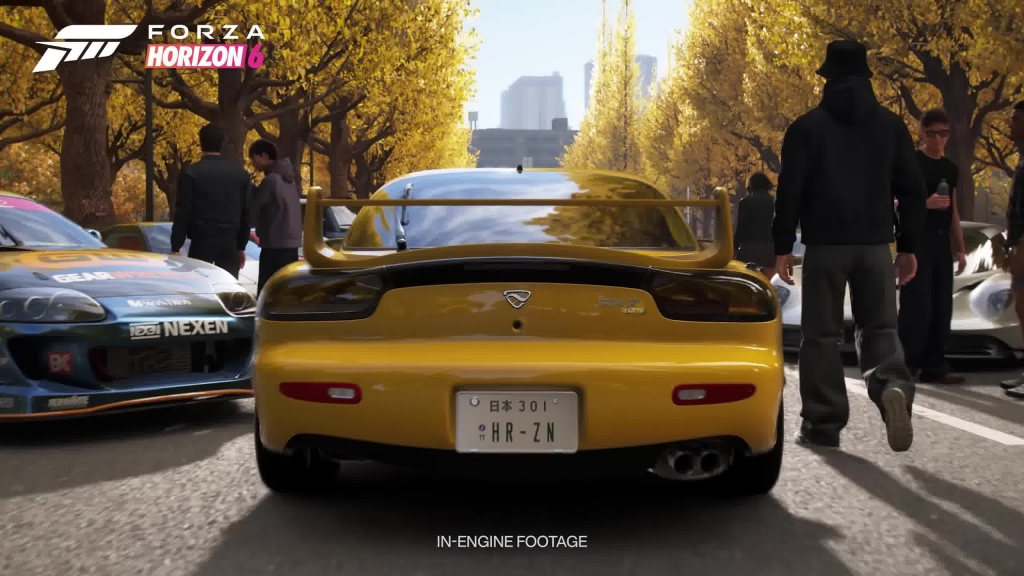
Forza Horizon 6 expands vehicle physics in a way that makes stunt driving—especially wheelies and endos—far more sensitive to tuning geometry, torque delivery, and surface grip variance. Unlike drifting, where player preference plays a large role, wheelie performance is almost entirely governed by physics: torque-to-weight ratio, suspension preload, drivetrain layout, and traction transfer.
This guide breaks down how to build both a forward wheelie car and a reverse wheelie (endo) setup, using structured tuning logic, comparative build tables, and drag strip optimization strategies.
1. Wheelie Physics in FH6 (Core Principles)
Wheelies in Forza Horizon 6 are driven by a combination of:
- Longitudinal torque transfer
- Rearward weight bias (or extreme power override)
- Suspension compression dynamics
- Tire grip differential (front vs rear)
- Surface traction amplification (drag strips, festival zones, space center)
Unlike drifting, wheelie builds are not flexible. Small tuning mistakes—especially in ride height and damping—can completely kill lift-off behavior.
2. Vehicle Selection Criteria (Wheelie vs Non-Wheelie Cars)
The first step is choosing a platform that can physically support torque lift.
| Attribute | Ideal Wheelie Car | Poor Wheelie Car |
| Drivetrain | RWD preferred | AWD/FWD heavy bias |
| Weight Distribution | Rear-heavy (≤45% front) | Front-heavy (≥55%) |
| Engine Placement | Mid/Rear engine ideal | Front engine |
| Downforce | Minimal/none | High aero kits |
| Torque Output | Very high (>500 lb-ft) | Moderate |
Key insight: While rear bias helps, extreme torque builds can override physics constraints entirely.
3. Example Build: Volkswagen Beetle Wheelie Platform
A classic starting point is a rear-biased compact like the Volkswagen Beetle, which naturally supports lift behavior.
Engine & Performance Swap Table
| Component | Choice | Purpose |
| Engine | 2.0L turbo flat-4 rally | High torque stability |
| Drivetrain | RWD | Reduces front load |
| Torque Output | ~500 lb-ft+ | Wheelie initiation force |
| Forced Induction | Turbo | Sustained pull |
Avoid cam-heavy upgrades that reduce torque consistency, as wheelies rely on low-end rotational force rather than peak horsepower.
Aero & Weight Optimization
| Component | Modification |
| Front bumper | Removed |
| Rear bumper | Removed |
| Wheels | Lightest available |
| Front tires | Narrow drag tires |
| Rear tires | Wide drag tires |
This setup reduces rotational inertia at the front and maximizes traction leverage at the rear.
4. Suspension & Tuning Setup (Critical Wheelie Configuration)
Wheelie tuning is about creating a controlled imbalance.
Suspension Behavior Table
| Parameter | Front Setup | Rear Setup | Effect |
| Tire Pressure | High | Low | Front bounce + rear grip |
| Damping | Soft | Stiff | Rear squat lift |
| Ride Height | High | High (or max) | Prevents ground clipping |
| Camber | 0° | 0° | Maximizes straight-line stability |
Key principle:
Front must rebound quickly, rear must compress and stick.
Differential & Drivetrain Setup
| Setting | Value |
| Front Diff | Locked (100%) |
| Rear Diff | Locked (100%) |
| Brake Bias | 50/50 |
| Transmission | Race 6-speed |
A locked diff ensures consistent torque distribution, which stabilizes wheelie trajectory.
5. Drag Strip Strategy (Forward Wheelies)
Drag strips in FH6—especially festival and space center zones—offer maximum grip density. This amplifies wheelie duration.
Launch Sequence
- Hold brake + throttle
- Build RPM in 1st gear
- Release brake smoothly
- Maintain throttle modulation
Gear Ratio Strategy
| Goal | Gear Tuning |
| Long wheelie distance | Longer final drive |
| Aggressive pop-up | Short gearing |
| Stability | Balanced mid-range gears |
Poor gear tuning leads to either:
- Instant flip-over
- Loss of torque after 2nd gear
6. Case Study: GMC Jimmy Endo (Reverse Wheelie Build)
The GMC Jimmy is widely considered one of the most powerful stunt platforms due to extreme horsepower potential (~1,750 HP in full build configuration).
Reverse Build Configuration Table
| Component | Setup |
| Drivetrain | AWD |
| Engine | Full race swap (max HP) |
| Tires | Wide front drag tires |
| Rear Tires | Narrow setup |
| Suspension | Opposite of wheelie tuning |
Reverse Suspension Logic
| Parameter | Front | Rear |
| Stiffness | Stiff | Soft |
| Tire Pressure | Low | High |
| Weight Transfer | Forward bias | Reduced grip |
This creates forward rotation lift instead of rearward lift.
7. Reverse Wheelie (Endo) Speed Tuning System
FH6 introduces reverse gearing sensitivity, allowing tuning of backward velocity.
Reverse Speed vs Acceleration Tradeoff
| Final Drive Setting | Reverse Top Speed | Acceleration |
| Speed-biased | ~160 mph | Low |
| Balanced | ~90–120 mph | Medium |
| Acceleration-biased | ~5–60 mph | High |
The system behaves like a balancing equation:
- Too much speed → no lift
- Too much acceleration → no sustained motion
Reverse Launch Behavior
| Setup Quality | Result |
| Over-speed bias | No wheelie initiation |
| Balanced tuning | Stable reverse wheelie |
| Over-acceleration | Instant stall |
8. Drag Strip Endo Challenge Performance
Testing reverse wheelies across a quarter-mile drag strip (Space Center) requires continuous throttle modulation.
Key Control Variables
- Throttle stability
- Steering micro-corrections
- RPM consistency
- Surface grip transitions
Common Failure Modes
| Issue | Cause |
| Front dip | Excess throttle |
| Spin-out | Oversteer from torque surge |
| Wheelie collapse | Gear ratio mismatch |
| Loss of line | Steering overcorrection |
9. Optimization Strategy Summary
To maximize stunt performance in FH6:
- Prioritize torque over horsepower tuning
- Use drag tires exclusively for grip amplification
- Remove unnecessary aerodynamic components
- Maintain extreme suspension asymmetry (front vs rear behavior split)
- Tune gear ratios last, not first
10. Progression, Economy, and Vehicle Access
Advanced stunt builds often require high-end swaps, performance parts, and multiple tuning iterations. In practice, many players accelerate progression by managing in-game economy systems such as FH6 Credits or acquiring specific stunt-ready platforms.
Some players also streamline experimentation by choosing to buy Forza Horizon 6 Cars directly to access rare or meta-relevant chassis without long progression loops.
Efficient resource allocation is critical because wheelie tuning is inherently iterative—small adjustments often require repeated testing cycles on drag strips or festival zones.
Closing Strategy Notes
Wheelie and reverse wheelie builds in Forza Horizon 6 are fundamentally about controlled instability. The fastest setups are not the most powerful in a raw sense, but the ones that most effectively manipulate torque transfer, suspension rebound timing, and traction asymmetry.
Mastery comes from iteration: every adjustment in gearing, damping, or tire pressure shifts the vehicle’s entire lift profile. Once those systems are understood, drag strip performance becomes predictable—and dramatically more extreme.